
Starting with Critical Illness Cover vs Life Insurance: Which Do You Need?, this opening paragraph aims to captivate and engage readers by providing a brief yet intriguing overview of the topic.
The subsequent paragraph will delve deeper into the specifics of the topic, offering clear and informative content.
Critical Illness Cover vs Life Insurance
When it comes to protecting yourself and your loved ones financially, critical illness cover and life insurance are two important options to consider. While both provide financial security in times of need, they serve different purposes and have unique benefits.
Differences between Critical Illness Cover and Life Insurance
Critical illness cover provides a lump sum payment if you are diagnosed with a serious illness that is covered by your policy, such as cancer, heart attack, or stroke. On the other hand, life insurance pays out a lump sum to your beneficiaries when you pass away.
The key distinction is that critical illness cover provides financial support while you are still alive, whereas life insurance offers protection for your loved ones after your death.
Examples of Suitability
- If you are the primary breadwinner in your family and want to ensure that your loved ones are financially secure if you were to pass away, life insurance would be more suitable.
- On the other hand, if you are concerned about covering medical expenses and maintaining your lifestyle in the event of a critical illness, then critical illness cover would be a better choice.
Benefits and Limitations
Critical illness cover provides a financial cushion if you are diagnosed with a serious illness, helping you cover medical expenses, rehabilitation costs, and other financial obligations. However, it is limited to specific illnesses Artikeld in your policy.
Life insurance, on the other hand, offers peace of mind knowing that your loved ones will be taken care of financially when you are no longer around. It can help pay off debts, cover living expenses, and provide for your family's future needs.
However, it does not provide any benefits while you are alive.
Critical Illness Cover
Critical illness cover is a type of insurance that provides a lump sum payment if the policyholder is diagnosed with a serious illness that is specified in the policy. This payment can help cover medical expenses, loss of income, or other financial burdens that may arise due to the illness.
Common Critical Illnesses Covered
- Cancer
- Heart attack
- Stroke
- Organ transplant
- Major organ failure
Critical illness cover typically includes a range of illnesses that are considered life-threatening or debilitating. The specific illnesses covered may vary depending on the insurance provider and policy terms.
Importance of Critical Illness Cover
Critical illness cover plays a crucial role in financial planning as it provides a financial safety net in case of a serious illness. Here are some reasons why critical illness cover is important:
- Medical Expenses: Critical illness cover can help cover the high cost of medical treatments and care associated with serious illnesses.
- Income Protection: The lump sum payment can replace lost income if the policyholder is unable to work due to the illness.
- Debt Repayment: The funds can be used to pay off debts such as mortgages, loans, or credit cards, relieving financial stress during a challenging time.
- Quality of Life: Having financial support allows the policyholder to focus on recovery and maintaining their quality of life without worrying about the financial implications of their illness.
Life Insurance
Life insurance is a financial product that provides a lump sum payment to beneficiaries upon the death of the insured individual. The primary purpose of life insurance is to provide financial protection and support to the dependents of the policyholder in the event of their death.
Types of Life Insurance
- Term Life Insurance: Term life insurance provides coverage for a specified period, such as 10, 20, or 30 years. If the insured individual dies during the term, the beneficiaries receive the death benefit. This type of insurance is typically more affordable but does not build cash value.
- Whole Life Insurance: Whole life insurance provides coverage for the entire lifetime of the insured individual. In addition to the death benefit, whole life insurance also accrues cash value over time, which can be borrowed against or withdrawn.
Scenarios where Life Insurance is Crucial
- Family Protection: Life insurance can ensure that your loved ones are financially secure in the event of your untimely death. It can help cover expenses such as mortgage payments, education costs, and everyday living expenses.
- Business Succession: If you own a business, life insurance can be used to fund a buy-sell agreement, ensuring a smooth transition of ownership in the event of your passing.
- Estate Planning: Life insurance can be used to pay estate taxes, ensuring that your assets are preserved for your heirs.
Factors to Consider
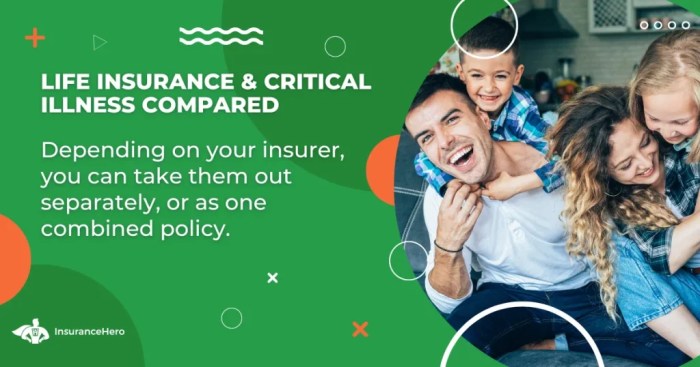
When deciding between critical illness cover and life insurance, several key factors need to be taken into consideration to make an informed decision that aligns with your needs and circumstances.
Age, Health Status, and Financial Obligations
Age and health status play a crucial role in determining the type of insurance that suits you best. Younger individuals may opt for critical illness cover to protect against potential health risks, while older individuals may lean towards life insurance to provide financial security for their loved ones in case of unexpected events.
Additionally, the level of financial obligations you have, such as mortgages, debts, or dependent family members, can influence your choice between the two types of insurance.
Premiums, Coverage, and Payout Structures
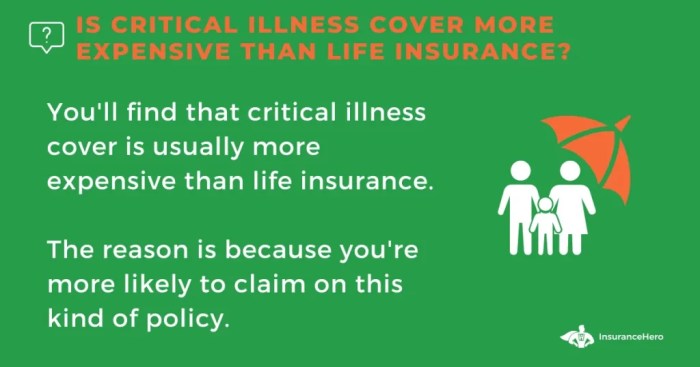
When comparing critical illness cover and life insurance, it is essential to consider the premiums, coverage, and payout structures of each. Critical illness cover typically offers a lump sum payment upon diagnosis of a covered illness, providing financial support during a challenging time.
On the other hand, life insurance pays out a lump sum to beneficiaries upon the policyholder's death, ensuring financial stability for loved ones. Understanding the differences in premiums, coverage limits, and payout structures can help you determine which insurance aligns best with your needs and budget.
Closing Notes
Concluding the discussion with a summary that encapsulates the key points and leaves readers with a lasting impression.
Clarifying Questions
What are the main differences between Critical Illness Cover and Life Insurance?
Critical Illness Cover provides a lump sum payment upon diagnosis of a critical illness, while Life Insurance offers a payout upon the policyholder's death.
When is Critical Illness Cover more suitable than Life Insurance?
Critical Illness Cover is ideal for individuals concerned about covering medical expenses in case of a critical illness diagnosis.
Why is it important to consider Critical Illness Cover in financial planning?
Critical Illness Cover can provide financial stability and support during challenging times if a critical illness strikes.
What are some common critical illnesses covered by Critical Illness Cover?
Cancer, heart attack, stroke, and organ transplants are often covered by Critical Illness Cover policies.
How does age influence the choice between Critical Illness Cover and Life Insurance?
Younger individuals may opt for Critical Illness Cover to protect against potential health concerns, while older individuals may focus more on Life Insurance for financial security.